CLICK HERE TO READ THE ENGLISH VERSION
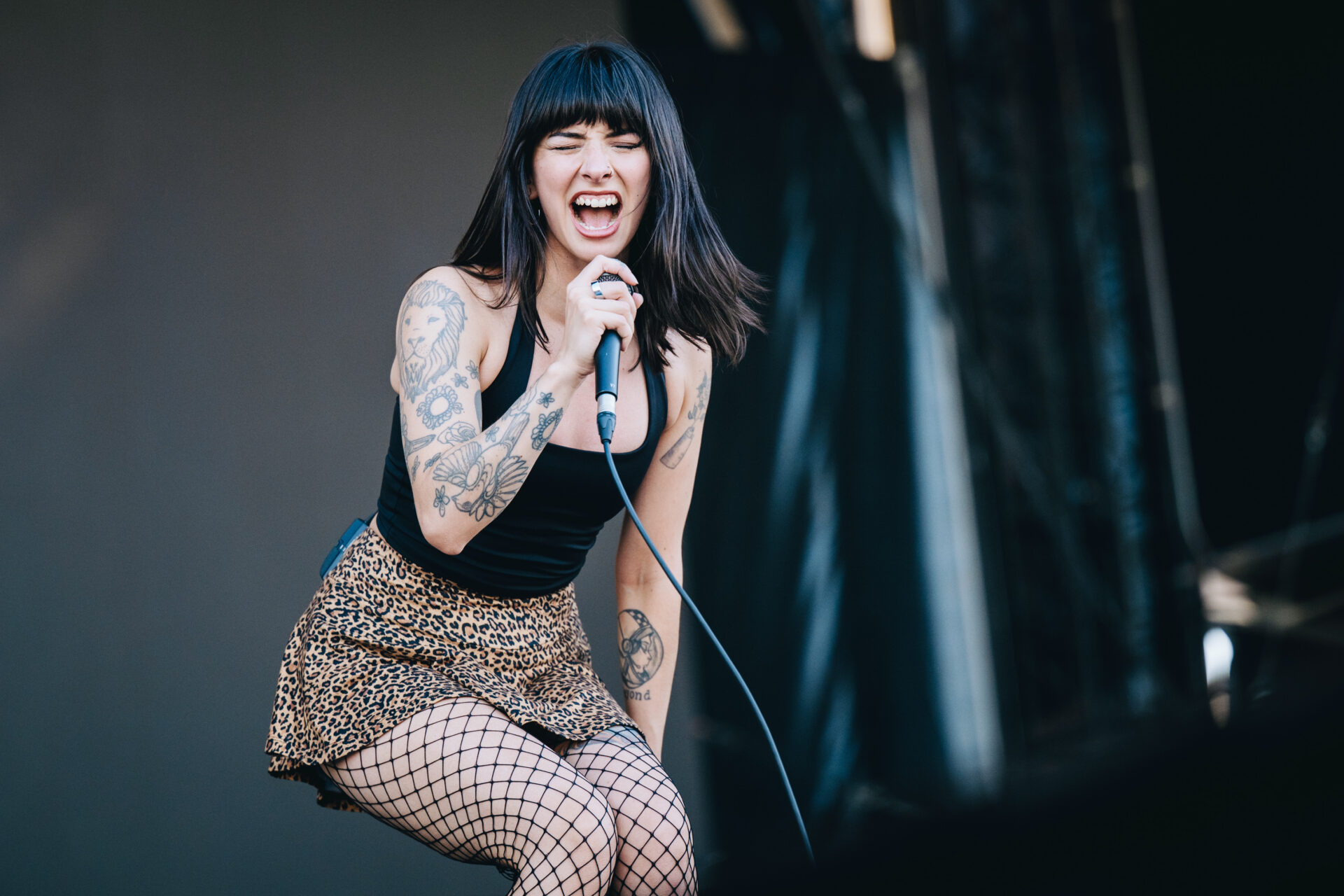
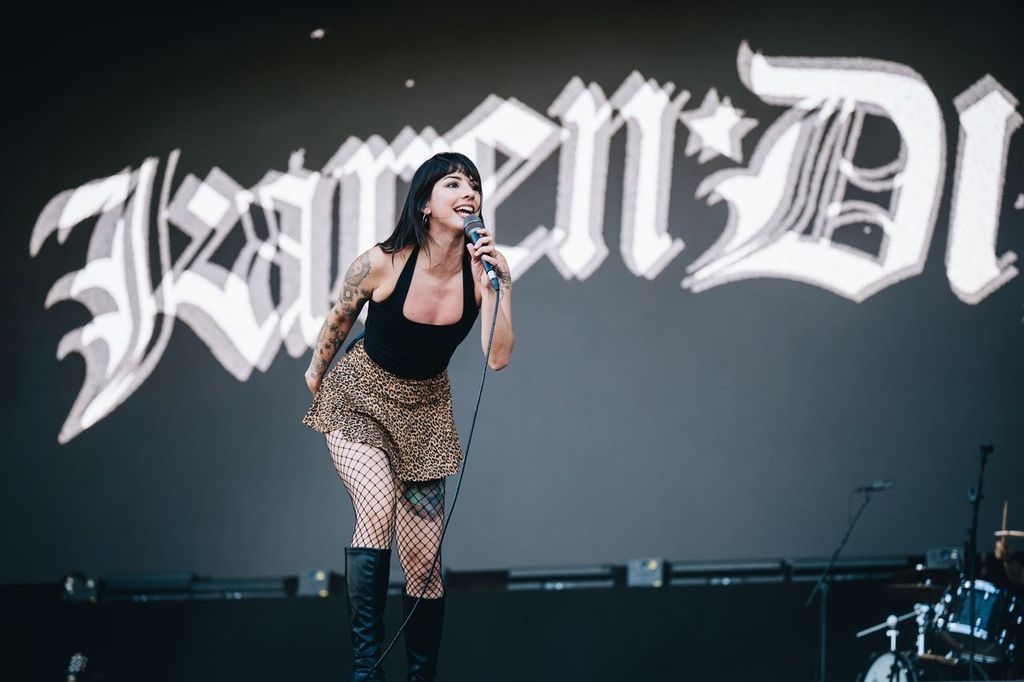
Novanta minuti fa Karen Dió ha suonato sul palco principale di un festival e in trentacinque dev’essere sul van per correre in aereoporto. La fila per intervistarla, in quest’ultima mezz’ora, è stata interminabile, nonché variegata, dai giornalisti di NME ai videomaker ungheresi del Sziget, per finire, purtroppo per Dió, con la sottoscritta e il suo quadernetto di domande. Ma l’artista si presenta senza alcuna fretta, sorridendo raggiante al netto della stanchezza ed esprimendo anche entusiasmo nell’apprendere la nostra vicinanza culturale (“parliamo lingue simili!”). Originaria di Santos – celebre città portuale del Brasile, nota ai più per il calcio e ai meno per una solida scena punk – e trasferitasi in Inghilterra per amore, Karen Dió ha sempre scritto canzoni, sempre guidata dallo spirito schietto e irrefrenabile che vediamo oggi. È stato solo dopo un periodo di pausa e di demotivazione, però, che è arrivata la notorietà in giro per il mondo.
Da allora per lei è stato un continuo susseguirsi di novità: tour con gli Avenged Sevenfold, i Limp Bizkit, i Sum 41, ora anche due concerti in arrivo con i Foo Fighters proprio nella sua terra natìa, a Belo Horizonte e San Paolo. La frenesia ha i suoi pro e i suoi contro — tant’è che l’artista ci ha scritto su un EP, “Fugaz”, per fotografare il suo vissuto e dare ad altre persone qualcosa in cui rispecchiarsi nella loro, di frenesia quotidiana. Tutto è fugace, insomma, tranne la musica che ci resta addosso nel tempo.
Immagine di copertina: Bridie Cummings
Come stai? Com’è andato il concerto al Sziget?
È stato fantastico. È la mia prima volta a questo festival: ero parecchio entusiasta di suonare qui perché so quanto è meraviglioso questo festival, perciò è stato bello salire sul palco e stare in compagnia di tutti! Mi sono divertita un sacco e spero che sia lo stesso anche per il pubblico, ma mi sembra che sia stato così. Mi sento come in Brasile: paese splendido, persone splendide.
Dici di essere cresciuta in Brasile, con una scena che ha influenzato molto la musica che fai. Potresti raccontarci la scena alternativa brasiliana?
È molto “fai da te”, ci si conosce quasi tutti; specialmente nella mia città, Santos, si cresce assieme e si cerca di organizzare dei concerti tra noi. Ho comunque l’impressione che nel Regno Unito e in America si abbia più l’opportunità di vedere questa scena, che sia più grande che in Brasile, ma anche lì è meravigliosa, ci sono persone veramente fantastiche e ti fai degli ottimi amici. È molto DIY e piuttosto piccola. Quando vai a São Paulo, che è la grande città, incontri più persone, ma nella mia città – Santos, dove vivevo – è davvero molto piccola. Ma lì mi sono divertita molto, e penso sia stata fondamentale per l’artista, la performer e la songwriter che sono oggi.
E poi sei andata a vivere in Inghilterra. L’hai fatto per la musica o per qualche altro motivo?
In realtà è stato per via di mio marito [Matt Bigland, ndr]. Quando mi sono trasferita nel Regno Unito, era il 2021 e avevo una band in Brasile, ma purtroppo quando me ne sono andata dal Brasile si era già sciolta. In realtà ho quasi abbandonato la musica, perché ricominciare da capo come persona, cercare lavoro, imparare la cultura e la lingua locale… sono tante cose assieme, e mi stavo ancora ambientando. Perciò non stavo pensando alla musica e a momenti non ricominciavo proprio più a farla, ma mio marito ha davvero creduto in me: lui pensa che io abbia talento, cosa che apprezzo.
È anche lui in una band, giusto?
Sì. Ha una band che si chiama Dinosaur Pile-Up. Ci siamo incontrati proprio grazie alle nostre band: io ero una loro grande fan, e lui era un grande fan dei Violet Soda [la vecchia band di Karen Dió, ndr]. Però sì, ha veramente creduto in me, e quando mi sono trasferita nel Regno Unito mi ha portata a qualche sessione di songwriting affinché non smettessi del tutto di scrivere, perché non stavo facendo nulla se non cercare di trovare lavoro e vivere una vita normale, no? Così ho finito per scrivere una delle nostre canzoni, che è la mia canzone più di successo. Si chiama “Sick Ride” ed è uno dei miei primi pezzi. Me la stavo prendendo molto comoda, perché non avevo intenzione di fare dei concerti in quel momento: volevo solo produrre la canzone. Poi l’ho pubblicata ed è andata virale. Perciò non ho esattamente avuto il tempo di prendermela comoda, perché le cose sono successe in fretta. Mi sono trasferita nel 2021, e penso che le cose si siano mosse molto in fretta da allora.
Pensi che ci sia una tua canzone che ti rappresenta particolarmente in questo momento?
Sì, tutte le canzoni del mio nuovo EP, “Fugaz”. Tutte le canzoni di questo EP parlano di quello che mi sta succedendo adesso, perché sono molto fresche, le ho scritte in questi ultimi otto mesi, per cui è tutto molto nuovo; parlano della mia difficoltà nel capire quello che succederà al mondo, specialmente nell’epoca dell’intelligenza artificiale. Penso che ora ci sia un’enorme opposizione all’IA, che è una cosa fantastica. Ma in quel periodo ero parecchio ansiosa: non sono solo una musicista – e ho visto gente fare musica con l’IA –, ma anche una graphic designer nel mio lavoro da ufficio. Ho pensato “adesso perderò entrambi i lavori”. Perciò è stato un periodo molto strano, e quindi parlo di come tutto stia accadendo e cambiando molto in fretta. Le mie nuove canzoni, “Free Yourself” e “Choke”, sono sicuramente quelle che sento più vicine a me.
Definisci la tua musica “Latin riot grrrl”: c’è anche la questione dell’essere una donna nell’industria musicale che fa questo tipo di musica…
È parecchio difficile, soprattutto venendo dal Brasile, che può essere un paese molto sessista. Non ci vado da un bel po’, quindi non so come siano ora le cose, ma ai tempi ho subito un bel po’ di sessismo. Le persone dicevano le peggio stronzate ed erano veramente fastidiose. È buffo perché all’epoca ero al loro stesso livello: dimostravo forse il doppio del sessismo, perché in un certo senso pensavo che fosse normale. Sono felice di aver avuto del tempo per crescere e capire. È cambiato tutto nella mia vita, ma sono fatta così, nel senso che non voglio che la prossima generazione subisca alcun tipo di sessismo, o anche omofobia, capisci? Nessuno se lo merita. È assurdo pensare che la gente creda che vada bene fare così, ed è una cosa così radicata. Ne ho sofferto quando vivevo nel mio paese, perciò cerco di parlarne in molti modi diversi, anche se sono situazioni semplici. Per esempio, quando la gente criticava i miei capelli quando li tagliavo corti – mi dicevano “non tagliarli corti, non sei carina”, qualsiasi cosa voglia dire – rispondevo di no e li tagliavo ancora più corti. Adesso in effetti i miei capelli sono parecchio lunghi, ma è comunque parte del mio vissuto e non posso nasconderlo. Sono, come dire, un libro aperto, e ho anche un problema di — c’è un termine per dire che qualcuno dice sempre quello che pensa…
Qualcuno senza peli sulla lingua?
Sì. Non ho peli sulla lingua, e qualcosa lo dico sempre in ogni caso, sono fatta così. Sto cercando di fare in modo che le altre persone che sopportano la stessa cosa, il sessismo, possano rivedersi in me e trarne forza, così da aiutarli a continuare le loro giornate, in pratica.
Questa era la mia ultima domanda, grazie mille!
Grazie a te!
— ENGLISH VERSION —
How are you? How was this Sziget show?
It was pretty amazing. It was my first time playing at the festival: I was very excited to play here, because I know how amazing this festival is. So it was just nice to be on stage and be with everybody! I had a great time and I hope everybody did, too — but it looked like they did. So yeah, amazing. I feel like in Brazil, beautiful country, beautiful people.
You mentioned growing up in Brazil with a scene that really influenced the kind of music you make. Could you tell us about the Brazilian alternative scene?
It’s very DIY, you kind of know most of the people, especially in my city, Santos. You grow up with them and then you try to organise shows with them. I still feel like in the UK and in America you have more chance to see this, that it’s somehow bigger than in Brazil. But it’s awesome — some really cool people, you make really nice friends in there. It’s just really, really cool, but very DIY and sort of small. When you go to São Paulo, which is the big city, then you kind of meet more people, but in my city – Santos, where I used to live – it’s just very, very small. But I had a good time, and I think it was fundamental for me to be who I am now as an artist, as a performer and a songwriter.
And then you moved to England. Was it for music or was it for something else?
It was actually because of my husband [Matt Bigland]. When I moved to the UK, that was 2021. I had a band in Brazil, but unfortunately, the band was over by the time I left Brazil. So, I actually almost didn’t go back to music, because starting all over again just as a person trying to find a job, you know, and learn the culture, learn the language… it’s so much, and I was still kind of adapting myself. So, I didn’t even think about music and I almost didn’t go back to music, but my husband really believed in me. He thinks I’m talented, which I appreciate.
He’s in a band, correct?
He is, he’s in a band called Dinosaur Pile-Up. We met each other because of our bands — I was really a fan of Dinosaur Pile-Up, and he really liked Violet Soda [Karen Dió’s old band]. But yeah, he really believed in me. So, by the time I came to the UK, he was taking me to some songwriting sessions, so I didn’t stop fully writing, because I was not doing anything, just trying to find a job and live a normal life, you know what I mean? I ended up writing one of our songs, which is my biggest song, it’s called “Sick Ride”. It was one of our first songs, and I had no intention, like, I was, let’s go really slow, I was, like, let’s not play shows right now, let me just produce the song, and then I release the song, and the song goes viral. So, I didn’t have much time to go slow — things happened suddenly. But yeah, I moved to the UK in 2021, and I felt like things moved quite quickly since then for me.
Is there a song of yours that, in your opinion, particularly represents you right now?
Yeah, all the songs from my new EP “Fugaz”. All the songs from this EP are really what’s going on with me right now, because they are very, very fresh, I wrote them in the last eight months, so everything is super new, it’s this whole struggle of understanding what’s gonna happen with the world, and especially at the time with AI. I feel like AI is having a huge backlash, which is amazing. But at the time, I was very nervous, because I’m not just a musician – and I saw people making music with AI – I’m also a graphic designer on my 9 to 5. So, I was like, I’m gonna lose both jobs soon. So, it was a very weird time, and this is sort of, like, where I’m touching on how things go very fast, and everything’s changing real quick. Yeah, that’s sort of it, like, my new songs, “Free Yourself” and “Choke”, are the ones that I relate to the most, for sure.
You define your music as “Latin riot grrrl”, so there’s also the fact of making this kind of music as a woman in the industry…
It’s very hard, especially coming from Brazil, which can be a very sexist country. I haven’t been there in quite a while, so I don’t know how this is going, but back then, I did suffer quite a lot of sexism, with people saying the most stupid shit that you could hear, and it’s very annoying. And it’s funny, because at the time, I was on the same level – maybe even twice as sexist –, because I thought that was sort of normal. I appreciate the time, because you kind of grow, and you understand. Everything’s changed, but this it’s just who I am — like, I don’t want the next generation to be suffering from any kind of sexism, or even homophobia, you know what I mean? No one deserves that. It’s crazy to think that people believe that’s okay to do, and that’s really rooted. I suffered that while I was back in my country, so I try to talk about it in many different ways, even if it’s a simple situation. For example, when people were criticising my hair when I was cutting it short — people were saying, “don’t cut it short, you don’t look pretty”, whatever that means. I was like, no, and then at the time, I cut it even shorter. Right now, I know my hair is actually very long, but still — it’s literally part of my life, and I can’t hide it. I’m a, how do I say?, I am an open book, and I also have a big issue of — there’s a term to say when someone is always saying stuff…
Someone that is very outspoken?
Yeah, I’m very outspoken, I’m always saying things anyway, so this is just who I am. I’m just trying to make sure that other people that suffer the same thing, sexism, can relate to this and have power behind them so that they can continue their day, basically.
This was my last question, thank you so much!
Thank you, I really appreciate it!