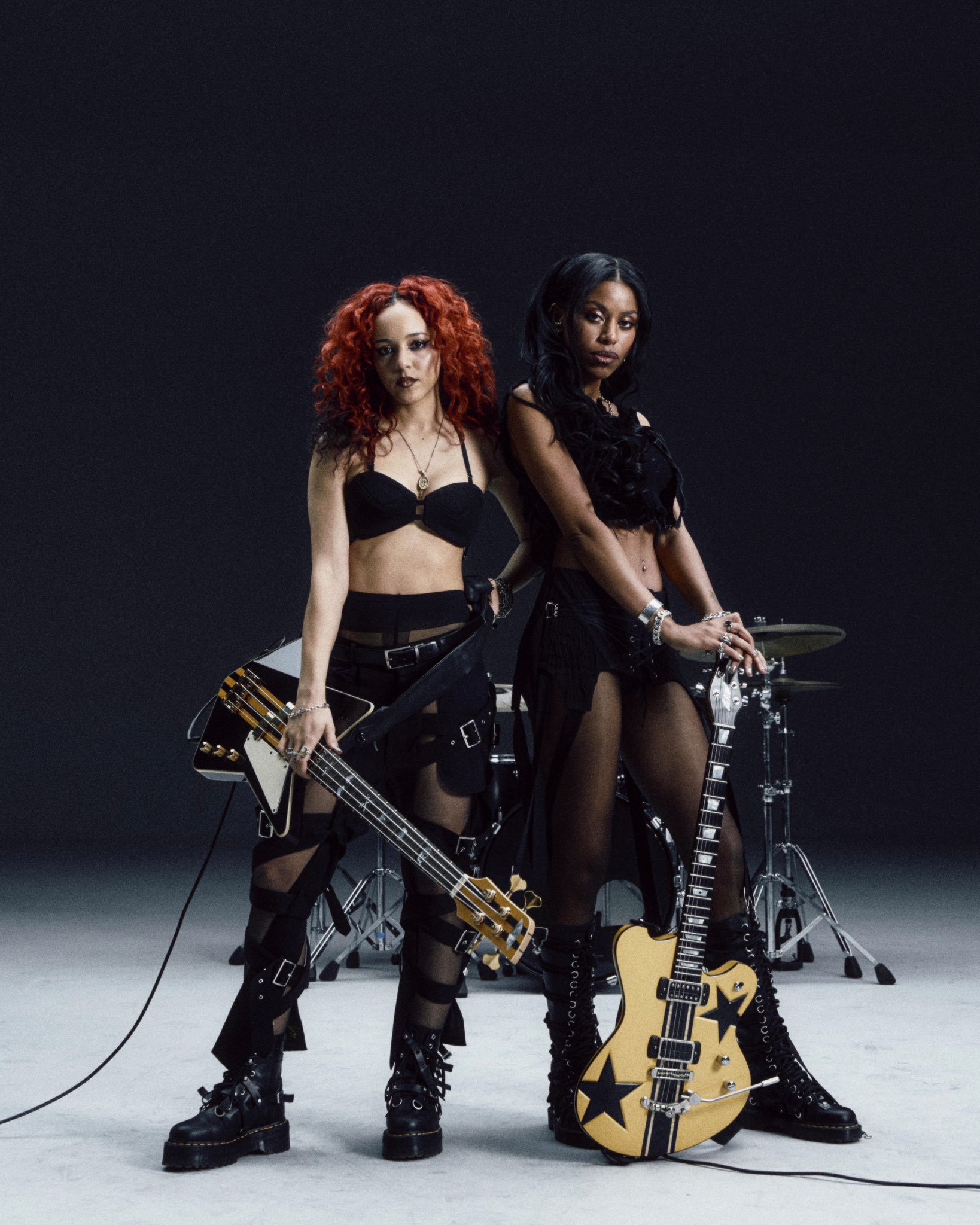
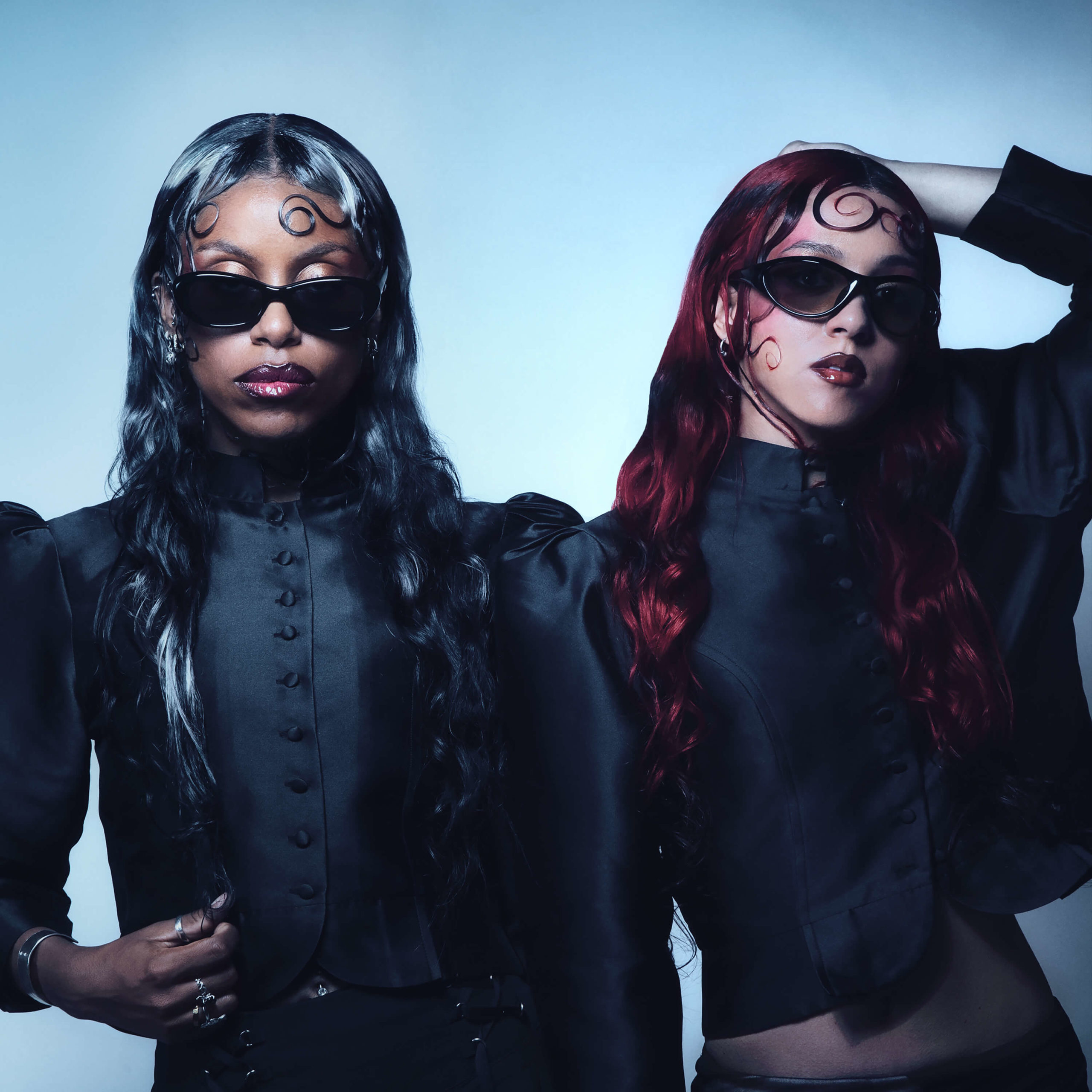
Oltre a essere alla base di uno dei progetti più particolari e innovativi che il rock abbia visto negli ultimi anni, Amy Love e Georgia South sono due persone alquanto indaffarate. A maggior ragione la vigilia del giorno d’uscita del loro terzo LP “Parasites & Butterflies“, che è quando riusciamo a trovare del tempo per una chiacchierata via Zoom a proposito della nuova musica in arrivo. Una mezz’ora in cui le due musiciste, in modalità multitasking, dedicano anche a disfare le valigie: “Siamo tornate ieri sera da New York” spiega South, bassista del duo, apparendo e sparendo dal video tra una giacca in tartan e una t-shirt, “e più tardi abbiamo un evento”. Si riferisce, come annunceranno qualche ora dopo lei ed Amy Love (chitarrista e cantante) sui loro canali social, ai festeggiamenti per il disco — a ingresso gratuito alla Camden Open Air Gallery, nell’omonimo quartiere londinese, uno storico centro nevralgico della musica alternativa.
Il ritorno a Londra, comunque, è tutt’altro che definitivo — non solo gireranno per negozi di dischi inglesi fino ai primi di settembre, ma a metà dello stesso mese partiranno per un tour europeo che si protrarrà fino a ottobre inoltrato, compiendo il giro di boa alla Santeria Toscana di Milano (il 30 settembre, a distanza di due anni e mezzo dalla data precedente). Un momento importante per un progetto che anni fa Tom Morello definì “la migliore band di cui non avete mai sentito parlare” e che in un decennio si è pian piano fatto strada dove conta esserci, dai tour in apertura a Muse e Foo Fighters ai palchi di Glastonbury e Sziget Festival. Non hanno intenzione di fermarsi, specialmente in un’industria musicale che ancora oggi, come sottolineano, fatica a riconoscere la diversità nel mondo del rock. Spesso paragonate ai Rage Against The Machine, con lo stesso fervore di Grandson per opporsi alle ingiustizie che affliggono il mondo del nuovo millennio, le Nova Twins non le mandano a dire — e finché ci sarà qualcun’altro che si sentirà ispirato dalla loro energia caparbia e vulcanica, continueranno a esistere a voce sempre più alta.
— SCROLL DOWN TO READ THE ENGLISH VERSION —
Allora, l’album esce domani. Come vi sentite?
Amy: è tutto piuttosto surreale. Sono stata molto impegnata, credo che non abbiamo ancora realizzato del tutto la cosa. Siamo atterrate ieri da New York, quindi oggi ci siamo svegliate con il jet lag e abbiamo pensato: “Oh, domani esce il nostro album e oggi abbiamo una festa”.
Posso immaginare. Ma sarà emozionante, vero?
Georgia: sì, sì, siamo emozionate per la festa di stasera.
Avete descritto il nuovo album come incentrato sul contrasto tra “il bene e il male, la luce e l’oscurità, la forza e la vulnerabilità”. La vostra musica ha sempre trattato temi di autoaffermazione e incoraggiamento, quindi penso che questo significhi un cambio di prospettiva nella narrazione. Pensate che i vostri ascoltatori possano trovare forza nel riconoscere l’oscurità dentro di sé?
Amy: allora, in sostanza, quando abbiamo scritto “Supernova”, era un periodo diverso. Era anche un periodo piuttosto difficile, perché c’era il lockdown e stavano succedendo un sacco di cose nelle nostre vite personali, ma avevamo questo spazio surreale e per la prima volta per tutti nel mondo… tutto si era fermato e avevamo tempo. Quindi avevamo scritto l’album con molta calma su temi tra cui il BLM [movimento Black Lives Matter, ndr] e da lì è nato “Supernova”. Ma penso che questo album fosse dovuto al fatto che siamo poi tornate dal tour senza avere davvero il tempo di recuperare o di occuparci della nostra salute mentale, ad essere onesta, o forse suppongo che avessimo meno conoscenze su come prenderci cura di noi stesse. Quindi è stato tutto un po’ turbolento, quando siamo tornate, e non abbiamo avuto il tempo di elaborare nulla: siamo dovute tornare subito alla creatività, alla scrittura, al tour. È proprio così che ci sentivamo in fase di scrittura, ed è quello che è finito nell’album. Volevamo essere oneste: non credo che avremmo potuto scrivere un album che fosse puramente felice, del tipo “andrà tutto bene”, perché non avrebbe riflettuto in maniera onesta la situazione in cui ci trovavamo, quindi è semplicemente venuto fuori così. Ma in quel caos abbiamo sicuramente trovato della bellezza, ed è per questo che lo definiamo un ponte tra caos e bellezza.
È un viaggio alla scoperta di sé, piuttosto che di autoaffermazione.
Amy: sì.
Dal punto di vista musicale, credo che l’album incorpori molto più di tutto: ci sono influenze R&B, ci sono le sonorità pesanti, e spinge di più sulle abilità vocali di Amy, cosa che ho assolutamente gradito.
Amy: grazie!
C’è qualcosa che ha ispirato i nuovi cambiamenti, che si tratti degli artisti con cui siete andate in tour o di qualcosa che avete ascoltato negli ultimi anni?
Georgia: penso che quando facciamo un album, non vogliamo scrivere di nuovo lo stesso album. Ci spingiamo avanti e cerchiamo di pensare “dove possiamo portarlo?” e “come può evolvere il suono delle Nova Twins?”, e troviamo davvero entusiasmante trovare nuove sonorità nel nostro mondo, quindi questa è stata la parte divertente della creazione di quest’album: scoprire in quanti modi diversi possiamo spingerci. Come autrici siamo cresciute e, come sai, abbiamo co-prodotto questo album, quindi ci siamo appassionate molto a Logic e ad armeggiarci su. Quindi penso che il sound si sia evoluto in modo naturale, e sì, non vogliamo mai rimanere ferme. Cerchiamo sempre di andare avanti e di cercare qualcosa di nuovo. Abbiamo una vasta gamma di influenze, diciamo sempre che crescendo con una doppia eredità… Amy è per metà iraniana e per metà nigeriana ed è cresciuta nell’Essex, io sono per metà giamaicana e per metà inglese e sono cresciuta a Londra, quindi penso che tutte queste diverse miscele di culture diverse entrino naturalmente in quello che creiamo senza nemmeno pensarci, perché lo viviamo e lo respiriamo sempre. Ci saranno sempre generi diversi, strutture diverse o suoni diversi, proprio perché abbiamo sempre fatto lo stesso con il cibo che mangiamo o con le famiglie che frequentiamo e che sentiamo parlare, fino alla musica che facciamo. Quindi sì, è molto naturale.
L’album è stato registrato con Rich Costey. Com’è stato lavorare con lui? C’è qualcosa che vi è rimasto impresso, ripensando alla fase di registrazione?
Amy: è stato veramente fantastico lavorare con lui. È stato gentilissimo, molto calmo, ed è quello di cui avevamo bisogno in quel momento, perché eravamo appena partite per l’America per un paio di mesi. Non l’avevamo mai incontrato prima, quindi era un po’ più rischioso, perché non sai come ti troverai con qualcuno, ma siamo stati molto fortunati perché siamo andati tutti d’accordo. Con lui c’erano anche il suo ingegnere Jeff [Citron, ndr] e il cane di Jeff, Juno, che in quel periodo era un ottimo supporto emotivo. Rich è stato fantastico, davvero: è stato davvero aperto alle nostre idee e ci siamo divertiti un sacco a provare diversi bassi e chitarre e a mettere il nostro sound e i nostri strumenti nei simulatori e i diversi tipi di setup che c’erano lì dentro. È stato davvero bello ascoltare e sperimentare; siamo andate lì abbastanza preparate e ci siamo divertite a registrare. Poi siamo andate in tour con i Foo Fighters per un po’, a metà del processo; poi siamo tornate e l’abbiamo finito.
Quest’anno è anche una sorta di doppio anniversario: avete pubblicato il vostro primo singolo “Bassline Bitch” circa 10 anni fa, vero?
Georgia: oddio, sì!
E il primo disco, “Who Are the Girls?”, è stato pubblicato cinque anni fa. Avete fatto un bel po’ di strada, da allora: finora quali sono state, secondo voi, le sfide più grandi che avete affrontato come musiciste, e quali pensate siano le sfide che i nuovi artisti potrebbero affrontare in questo momento?
Amy: penso che, quando abbiamo iniziato, abbiamo affrontato delle sfide in termini di persone. L’industria, sai, pensava sempre “dove le mettiamo? Perché non sembrano rock, quindi non appartengono a questi spazi, però non sono neanche R&B e non sono pop. Non appartengono a questi spazi”. Quindi è un po’ come se fossero molto confusi dal fatto che si possa avere un aspetto diverso dalla musica che si fa, o fare musica diversa e continuare a esistere nell’industria musicale. È stata una sfida che abbiamo affrontato per molto tempo e che continuiamo ad affrontare. La situazione è migliorata negli ultimi anni, soprattutto dopo il movimento BLM e il movimento Me Too: le donne sono più in primo piano e si possono vedere lineup più diversificate in alcuni festival, il che è davvero incoraggiante. Ma credo che negli spazi più mainstream ci siano ancora molti progressi da fare in termini di presenza del rock e di presenza delle donne in questi spazi, cosa che deve ancora accadere, soprattutto per quanto riguarda gli headliner dei festival e gli slot in tarda serata. Se vogliamo avere delle headliner donne, allora dobbiamo farle crescere in questo modo e inserirle nei palchi principali o negli slot successivi per avere questa opportunità. Quindi penso che ci siano degli aspetti positivi, perché ci stiamo muovendo nella giusta direzione, ma c’è ancora molta strada da fare.
Avete sempre celebrato le donne, le persone di colore e le minoranze, e avete sempre sottolineato il fatto che c’è ancora del lavoro da fare in termini di rappresentazione. Quali sono, per voi, i primi passi da fare per essere più inclusivi?
Amy: penso che s’inizi con un cambiamento di dinamiche per le persone che si trovano in posizioni più privilegiate, come le nostre controparti maschili. O se hai una piattaforma, sei in grado di usarla, quindi inizia sicuramente da lì. Si chiede alle donne “siete femministe?”, ma si dovrebbe chiedere di più agli uomini “siete femministi?”, perché dominano ogni settore. Questa domanda dev’essere inoltrata a loro e dev’essere presa molto più seriamente. Per quanto riguarda noi, facciamo sempre il possibile nel nostro campo. Nel nostro tour abbiamo costruito, in pratica, una rappresentanza femminile. Abbiamo gli Hot Wax in tour – sono tre musicisti, due straordinarie frontwoman – e poi abbiamo Ashaine White, un’artista incredibile che sta emergendo nella scena jazz e alternativa, e che mescola questi due generi insieme. Quindi per noi è davvero importante che anche i nostri spazi siano inclusivi e che ci uniamo ad altre donne che la pensano come noi, e a donne agguerrite: credo che al momento siamo a questo punto, stiamo solo lavorando nel nostro campo.
Un’altra sfida che i nuovi artisti potrebbero trovarsi ad affrontare, direi, è il fatto che al giorno d’oggi è richiesto loro di essere anche “content creator”: anche voi, ultimamente, avete pubblicato molti contenuti sui social media, e stanno funzionando molto bene. Pensate che sia una sorta di necessità per un artista al giorno d’oggi?
Georgia: sì, credo che da quando abbiamo iniziato a oggi siano decisamente cambiati il mondo dei social media e ciò che viene richiesto a un artista. Quando abbiamo iniziato, osservando la cosa, ci siamo dette “oddio”. Gli artisti vogliono solo essere artisti, scrivere musica, suonare e fare tutto il resto. Ma quando devi pensare a fare contenuti, è un concetto un po’ strano. Ma purtroppo le cose si evolvono e devi accettarle o meno, quindi abbiamo trovato la nostra voce in questo, e il nostro modo di sentirci comunque autentiche. Quando creiamo contenuti, cerchiamo di renderli divertenti, perché è molto lavoro da fare. Perché è come se avessi il compito di scrivere un album, registrarlo e portarlo in tour, però devi anche essere un content creator, il che è fuori di testa.
La pensi così?
Georgia: penso che alcuni artisti abbiano opinioni diverse al riguardo. Alcuni amano i contenuti social e li fanno e li producono con naturalezza, ma sì, montare video eccetera richiede un sacco di tempo.
In effetti è così, capisco cosa intendi. Credo che una cosa che non sia cambiata nel vostro modo di fare musica e tutto ciò che la circonda sia il legame tra musica e moda. Avete un marchio, Bad Stitches, che riguarda gli abiti che realizzate per i vostri concerti. Quale pensate sia il legame tra musica e moda? Quanto pensate che sia profondo e cosa significa per voi l’etica DIY in musica e moda?
Amy: diciamo sempre che la nostra moda ha l’aspetto della nostra musica. È un grande mix e incontro culturale di tutto, quindi è piuttosto difficile da inquadrare. Ma la nostra estetica è molto fai-da-te: creiamo i nostri abiti da sole e personalizziamo molte cose, adattandole per essere qualcosa in cui ci sentiamo forti. Ci sentiamo sempre come se la musica fosse la nostra armatura, e i vestiti fossero l’armatura in senso letterale, quindi direi che abbiamo bisogno di sentirci riconoscibili, di sentirci bene. Celebriamo anche molti stilisti che amiamo, soprattutto: a volte si trovano stilisti di boutique molto fighi che sono anche molto creativi, e questo può essere un ottimo abbinamento anche per noi, e noi veniamo da quel mondo, quindi lo adoriamo. Amiamo i vestiti, pensiamo siano divertenti. È un modo per esprimere noi stesse e fa parte di noi. Se non fossimo musiciste, probabilmente saremmo stiliste.
Vi ci vedo, a dire il vero. Un’altra cosa che vi appassiona è dare voce alle situazioni di ingiustizia nel mondo: ora il testo di “Piranha” parla di “crescenti tensioni nel mondo”. Chi “ha i giorni contati” e “dovrebbe essere terrorizzato”?
Amy: è buffo che tu l’abbia chiesto: in fondo è da entrambi i punti di vista. Per quanto riguarda quel passaggio, è quasi la prospettiva del cattivo, cioè delle persone che sono al potere e che stanno causando questa distruzione, quindi è come se “avete i giorni contati”, ma sembra quasi che tutti noi abbiamo i giorni contati a questo punto. Quindi, in un certo senso, i civili che stanno combattendo non hanno più tempo. Ci stiamo aggregando, ci stiamo unendo, stiamo cercando di smantellare il caos e la distruzione che i potenti hanno causato. Ma d’altra parte, a volte lo si può vedere come un “siamo tutti terrorizzati”, perché quando guardi al mondo e alla sua situazione, ti sembra assolutamente assurdo. Oggi abbiamo ripetuto la storia, e non abbiamo imparato da essa, quindi dovremmo essere tutti terrorizzati. È come se in alcuni passaggi della canzone ci fossero dei doppi significati.
Vi siete fatte sentire a riguardo soprattutto ultimamente, nelle vostre ultime dichiarazioni circa una stagione dei festival alquanto strana e caotica. Anche se, nel caos, ora ci sono tantissimi artisti che dicono la loro.
Georgia: sì, decisamente. E anche di recente con i Mary Wallopers: hanno suonato al Victorious Festival e avevano una bandiera della Palestina sul palco e il responsabile di palco è letteralmente entrato e l’ha strappata, ha tolto l’audio e stava per togliere la bandiera, credo. È stato davvero terribile.
Ne ho sentito parlare. È una cosa molto inaspettata, ma allo stesso tempo no, considerando quello che è successo di recente.
Georgia: sì, sì. Penso che stiano solo cercando di impedire agli artisti di parlare. Le persone al potere hanno paura degli artisti perché possono parlare, hanno questa piattaforma e la useranno, sai, per il bene.
Penso che queste piattaforme in generale – sia la musica, sia i social media – si possano usare semplicemente per promuovere qualcosa, oppure anche per dire la propria, come fate voi.
Georgia: sì, questo è il lato positivo.
Per concludere, l’album è alle porte: cosa possiamo aspettarci, adesso? C’è qualcosa di cui andate particolarmente fiere, o che non vedete l’ora di fare?
Amy: fondamentalmente sì, penso che siamo orgogliose dell’intero processo e sai, ora siamo donne, abbiamo iniziato da adolescenti in questo settore. Non parlo per Georgia – ma sicuramente è d’accordo –, ma io sono orgogliosa di come ci siamo orientate nel settore e di come abbiamo mantenuto i nostri valori. Ci siamo tenute strette la nostra amicizia, siamo cresciute e abbiamo affrontato tante cose insieme, e quest’album è un’altra parte della storia. È un’altra parte del puzzle, e lo sarà anche il prossimo, quindi è come se questi album ci portassero in viaggi incredibili: siamo in grado di fare cose incredibili, raggiungere moltissime persone incredibili e fare la differenza. Anche se si trattasse di una sola persona che dice “questa canzone ha fatto la differenza per me” o “tu hai fatto la differenza perché ora anch’io voglio suonare il basso”, o “riesco a comprendere perché sto passando la stessa cosa”… sai, quando ci guarderemo indietro, quando avremo la fortuna di invecchiare, potremo dire “ehi, abbiamo fatto un sacco di cose insieme”. E questo album è solo una parte straordinaria del puzzle: siamo veramente orgogliose di essere riuscite a farne un altro. Non è facile essere creative tutto il tempo, su richiesta — penso che la gente creda che gli artisti si limitino a dire “sì, be’, farò un album”. Non è così: ti stai dedicando anima e corpo a qualcosa, e ci vuole fegato per riuscire a farlo. Quindi, sì: questo è il prossimo capitolo, e ce ne auguriamo altri.
— ENGLISH VERSION —
So, release day is tomorrow. How are you feeling?
Amy: it’s all a bit surreal. I’ve been really busy, I think we haven’t quite taken it all in yet. We landed from New York yesterday, so today we woke up jet lagged and literally like, “oh our album’s tomorrow and we have a party today”.
I can imagine. But it’s going to be exciting, isn’t it?
Georgia: yeah, yeah, we’re excited for the party tonight.
You described the new album as being about contrast between “the good and bad, light and darkness, strength and vulnerabilities”. Your music has always been about self-empowerment and uplifting themes, so I think this kind of means changing angles in your storytelling. Do you think your listeners might find empowerment from acknowledging the darkness within themselves?
Amy: so, basically, when we were writing “Supernova”, it was a different time. It was also quite a difficult time, because of lockdown and loads of things were going on in our personal lives, but we had this surreal space and for the first time for everyone in the world… everything stopped and we had time. So yes, we wrote the album quite leisurely around BLM – some of it – and then that was “Supernova”. But I think, with this album, it was in the back of coming back from tour — not really having time to catch up on ourselves or our mental health, to be honest, or we had less knowledge on how to look after ourselves, I guess. So it was a little bit turbulent when we got back and we didn’t actually have time to process anything: we had to go straight back into being creative, writing, a tour and that’s just how we were feeling at the time of writing and that’s what went into the album. We wanted to be honest: I don’t think we could have written an album that was purely happy and like “everything’s gonna be alright” because that wouldn’t have been an honest reflection of where we were, so that’s just how the album came out. But in that chaos, we definitely found beauty, and that’s why we define it as bridge between chaos and beauty.
It’s a journey of self-discovery, rather than straight up self-empowerment.
Amy: yeah.
Musically, I think the album incorporates a lot more of everything: you’ve got R&B influences, you’ve got the heaviness — and there’s more of Amy’s vocal prowess, which I absolutely loved.
Amy: thanks!
Is there something which inspired the new changes — be it the artists that you’ve toured with lately, or anything you’ve listened to in in the last few years?
Georgia: I think, when we do albums, we don’t want to kind of write the same album again. We’re pushing forward and trying to think like, “where can we take it?” and, “How can the Nova sound evolve?”, and we find it really exciting to find new sonics in our kind of world, so that was the fun part about creating this album — discovering how many different ways we can push ourselves. Our writing has grown, and you know, we co-produced this album, so we got really into Logic and playing around with that. So I think it just kind of evolved naturally, and yeah, we never want to kind of stay still. We’re just always trying to push forward and look for something new. We have a wide range of influences, we always say growing up, being from dual heritage… Amy’s half Iranian, half Nigerian and grew up in Essex, I’m half Jamaican, half English and grew up in London, so I think all those different blends of different cultures just naturally go into what we create without even thinking about it, because we just always live and breathe it. It’s always going to be different genres or different textures or different sounds, just because we’ve always done that with like the food we eat or the families that we hang out with and hearing them talk, to the music we make. So yeah, it’s just very natural.
The album was recorded with Rich Costey. How was working with him? Is there anything that “stayed” with you, looking back on the recording process?
Amy: Rich was super amazing to work with. He was so kind, very calm, which is what we needed at that time, because we up and left for America for a couple of months. We hadn’t met him previously, so it was a little bit more of a risk, because you don’t know how you’re going to get on with someone, but we were very fortunate that we all did get along very well. He had his engineer Jeff [Citron, ndr], who was also there, and Jeff’s dog Juno, which was a lovely emotional support at the time. Rich was just amazing, really — he was just really open to our ideas and we had just lots of fun like trying different basses and guitars and putting our sound and some of our stuff through his simulators and different kind of setup machine that was in there. So it was really cool to hear and experience — you know, we went in there quite prepared so we just had fun recording it really. Then we went on tour for Foo Fighters for a bit halfway through, and then we came back and finished it off.
This year is also kind of a double anniversary — you published your very first single “Bassline Bitch” around 10 years ago, didn’t you?
Georgia: oh my god, yeah!
And the first record, “Who Are the Girls?”, was released five years ago. You’ve got quite a long way since then: so far what would you think were the biggest challenges that you’ve faced as musicians — and what would you think are the challenges that new artists might be facing right now?
Amy: I think, when we first started, we faced challenges in terms of people — the industry was always like, you know, “where do we put them? Because they don’t look like rock so they don’t belong in these in these spaces, but then they’re not r&b and they’re not pop. They don’t belong in these spaces”. So it’s a bit like they were just very confused that you could look different to the music that you’re making, or make different music and still exist in the music industry. So that was a challenge that we faced for a long time, and we still do. It’s gotten better in recent years, especially since the BLM movement and the Me Too movement, where women are more to the forefront, and you can see more diverse festival bills on some festivals, which is really encouraging. But I think, in the more kind of mainstream spaces, there’s still a lot of progress to be made in terms of rock being seen in these spaces and women being seen in these spaces which still needs to happen, especially on headline slots on festivals and playing late night slots. If we want to have female headliners, then you need to build them up that way and put them into onto these kind of main stages or later slots to have that opportunity. So I think there are positives because we are moving in the right direction, but we’ve still got a way to go.
You’ve always been about celebrating women, people of colour, and minorities, and you’ve always been vocal about the fact that we still have work to do in terms of representation. Which steps do you think could be made first to be more inclusive?
Amy: I think it starts with the dynamic shift for, I guess, people who are in more privileged positions, like our male counterparts. Or if you’re you’ve got a platform you’re able to use that, so it definitely starts there, you know. People ask the question to women, “are you feminists?” but more people should be asking men “are you feminists?”, because they dominate every industry. That question really needs to be passed on to them and for them to take it a lot more seriously. In terms of, like, us and stuff, we always do what we can in our field. On our tour we’ve built — like, it’s all female representing, basically. So we’ve got Hot Wax on tour – there are three pieces, two amazing frontwomen in it — and then we’ve got Ashaine White, she’s an incredible artist who’s coming up in the jazz, alt scene, and mixes those two genres together. So for us it’s really important that our spaces are inclusive as well, and that we band together with other like-minded women and fierce femmes, you know — I think that’s where we’re at at the moment, it’s just working on our area.
Another challenge that new artists might be facing, I’d reckon, is the fact that nowadays they are kind of required to be also “content creators” — you, too, lately have been putting out a lot of social media content, and it’s working really well. Do you think it’s kind of a necessity for an artist nowadays?
Georgia: yeah, I think from when we first started to now it’s definitely changed in terms of the world of social media, and kind of what’s required of you as an artist. I think, when we first started, seeing it, we were like, “oh god”. Like, you know, artists just want to be artists and write music and play shows and do everything in between. But when you have to think about doing content, it was a kind of strange concept. But unfortunately, it’s just how things are evolving and you have to either get on board with it or not, so we just found our voice in it and found a way for us to feel like it was still authentic to us. When we make content, we just try and make it fun in the process, because it is a lot. Because it’s like, you have the job of like writing an album, recording it and touring it, but also it’s like you have to be now a content creator, which is insane.
You think so?
Georgia: I think some artists will have all different opinions about it. Some love it and will naturally do it and make it but yeah, it just it takes up a lot of time to edit videos and stuff.
It does actually, I get what you mean. I think one thing that hasn’t changed about the way you make music and everything that surrounds it is the link between music and fashion. You got a brand called Bad Stitches, and it’s about the outfits that you make for your shows. What do you think is the bond between music and fashion? How deep do you think it goes, and what does that the DIY ethic mean to you both in music and fashion?
Amy: we always say that our fashion is what our music sounds like. So like, it’s a big mix and culture clash of everything, so it’s quite tricky to pinpoint it. But our aesthetic is very DIY — we make our outfits ourselves and we customise a lot of things, tailor it to what we feel strong in. We always feel like music is like our coat of armour, and the clothes are the literal armour — so we’re going to say we need to feel knowable, we need to feel good. We do also celebrate lots of designers we love, especially — sometimes you find cool boutique designers who are also really creative and that can be a really good match of us too, and we’re from that world, so it’s like, we just love it. We love clothes, we just feel like it’s fun. It’s a way to express yourself, and it’s just a part of us. I feel like, if it wasn’t musicians, we’d probably be fashion designers.
I can see it, honestly. Another thing you’re passionate about is giving voice to situations of injustice in the world: now the lyrics for “Piranha” are about “growing tensions in the world”. Who is “on borrowed time” and “should be terrified”?
Amy: it’s funny that you asked that — basically it’s from both perspectives. So in terms of that lyric, it’s almost like the perspective of the villain, which are the people who are in power, who are causing this destruction, so it’s like “you’re on borrowed time”, but it almost feels like we’re all on borrowed time at this point. So in one way, as the civilians who are fighting back, they’re running out of time. We are coming together, we’re unifying, we are trying to dismantle the chaos and the destruction that they have caused. But in another way, sometimes you can see it as “we’re all terrified” because when you look around the world and the state of it, it just feels absolutely absurd. At this day and age, we’ve kind of repeated history again, even though we haven’t learned from it, so we should all be terrified. It’s definitely like there’s double double meanings in a few of the lyrics in that song.
You’ve been quite vocal about this — especially lately, in your last couple of statements during a very weird and chaotic festival season. Although, while it was quite chaotic, now there are so many artists speaking their minds.
Georgia: yeah, definitely. And even seeing recently, with The Mary Wallopers — they played Victorious Festival, and they had a Palestine flag on their stage and the stage manager literally came on and ripped it off, cut all their sound, and they were gonna take the flag off, I think. It was really awful.
I heard about it. It’s very very unexpected, but also not, considering what has been going on.
Georgia: yeah, yeah. I think they’re just trying to silence artists from speaking out. People in power are afraid of artists because they can speak out, and they have this platform, and they’re going to use it, you know, for good.
I think these platforms in general – both music and social media – you can use them to simply promote things, but you also can use them to speak your mind, as you do.
Georgia: yeah, that’s the good side of it.
And to wrap things up — the album’s coming out soon: what can we expect next? Got something that you’re particularly proud of, something that you’re looking forward to?
Amy: basically, yeah, I think we’re proud of the whole process and you know, as we’re women now, like — we started off as teenagers in this industry. I don’t speak for Georgia, but sure she agrees: I’m just proud of how we’ve really kind of navigated ourselves through the industry, and how we’ve really kind of just kept our values. We’ve really held tight onto our friendship, and we’ve just grown and gone through so much together, and this album’s another part of the story. It’s another part of the puzzle, so will the next, so it’s like these albums take us on such incredible journeys, and we’re able to do these amazing things and reach so many amazing people and make a difference. Even if it’s one person saying “this song made a difference to me” or “you make a difference because I want to now play bass, or “I can feel this because I’m going through the same thing”… you know, when we look back, when we’re fortunate enough to grow old, we can be, like, “you know, we’ve fucking done a lot together”. And this album is just an amazing part of the puzzle: we’re really proud that we’ve managed to make another. It’s not easy being creative all the time, on demand — I think people think artists are just like “yeah, well, I’ll make an album”. It’s not: you’re really pouring yourself into something, and it takes a lot to do that. So yeah, this is the next chapter, and here’s to more.